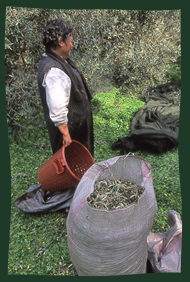
 Of
all the world’s most venerable and ancient trees, perhaps
none is more closely associated with the history
and development of Western civilization than the olive. Of
all the world’s most venerable and ancient trees, perhaps
none is more closely associated with the history
and development of Western civilization than the olive.
In mythology, Goddess Athena created the first tree during
her battle with Poseidon, Greek God of the sea. Athena planted an
olive tree at the Acropolis, and she won the competition, providing
the city of Athens with food, oil, shelter and wood.
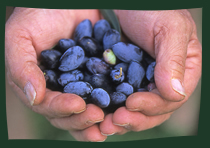 First cultivation of olives began after 2000 BC
in Crete, Greece. Olive oil production became crucial to the island’s
economy, and began exporting it to the rest of the Mediterranean,
North Africa and Asia. First cultivation of olives began after 2000 BC
in Crete, Greece. Olive oil production became crucial to the island’s
economy, and began exporting it to the rest of the Mediterranean,
North Africa and Asia.
 Homer called it Liquid Gold. To the people in the Mediterranean, olive oil has been more than something to cook food; it remains a key part of a healthy diet with proven life enhancing benefits. Homer called it Liquid Gold. To the people in the Mediterranean, olive oil has been more than something to cook food; it remains a key part of a healthy diet with proven life enhancing benefits.
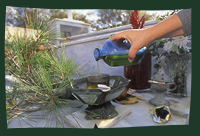
Oil is paramount in all of today's religious ceremonies. The Orthodox Church uses it during baptisms, while oil is used to fuel little lamps kept in churches and shrines in every corner of the country.
|
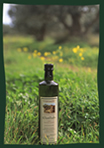 To some it meant survival. During the last bitter occupation in WW2, Greeks relied on oil to keep themselves alive. Once used for simple medicinal purposes, olive oil is at the centre of a revival with the today's food, fashion and lifestyle gurus (note brands like Korres and Apvita). To some it meant survival. During the last bitter occupation in WW2, Greeks relied on oil to keep themselves alive. Once used for simple medicinal purposes, olive oil is at the centre of a revival with the today's food, fashion and lifestyle gurus (note brands like Korres and Apvita).
Hardly surprising that it's magical powers were an endless source of fascination and wonder in ancient Greece. By the 6th century BC, olive trees were revered and protected becoming the symbol of peace.
 At the first Olympic Games in 776 BC,held in ancient Olympia an olive branch was awarded to the winners. While the Athletes rubbed it all over their body, winners were adorned with the simple olive wreath. At the first Olympic Games in 776 BC,held in ancient Olympia an olive branch was awarded to the winners. While the Athletes rubbed it all over their body, winners were adorned with the simple olive wreath.
It is this symbol which has been adopted by the UN, one of peace and an end to hostilities.
|